Step into
C12’s
quantum lab

Person wearing a white checkered coat and blue hairnet opening transparent plastic curtains in a sterile, industrial environment.
At C12, the future of computing is built by hand, one atom at a time. Behind every breakthrough lies a space designed for absolute precision - our lab in the heart of Paris
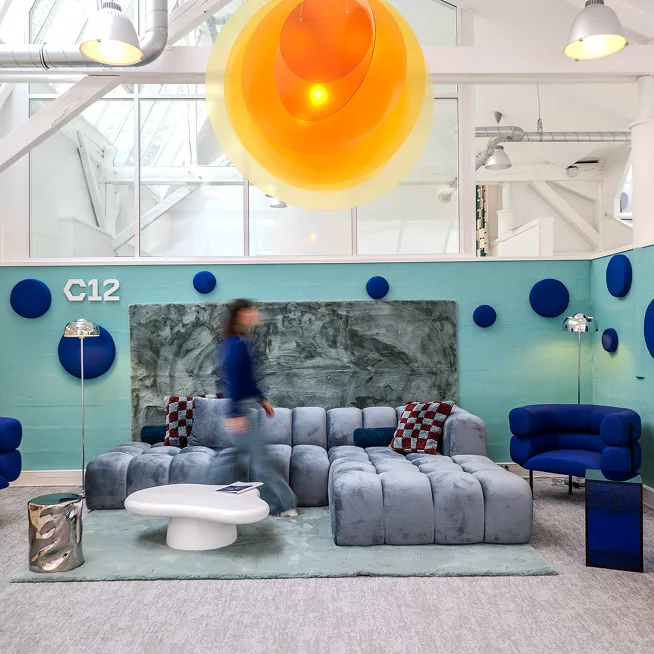
Modern lounge area with blue and gray upholstered modular sofa, blue accent chairs, round white coffee table, and large layered orange pendant light.Close-up view of a large classical dome with columns illuminated by sunlight against a clear blue sky, flanked by older buildings on both sides.
Our LOCATION

Paris, from the
ground Up

Our lab spans two sites in the heart of the Latin Quarter, from the bustling streets around the Panthéon to a specially designed underground facility, shielded from noise, light, and vibration.

Stone fountain with water in the foreground of a cobblestone street and beige building with tall windows and wooden door.Close-up of a classical dome with columns and ornate details, surrounded by adjacent historic buildings under a clear blue sky.
19 rue Valette,
75005 Paris
26 rue des Fossés Saint-Jacques,
75005 Paris
Map showing central and surrounding arrondissements of Paris, including major roads and neighborhoods.

A tour through the process

STEP 1
Theory
It all begins with physics. Our Theory team lays the foundation, modeling the physics of our technology and exploring how noise, control, and architecture interact. Their insights shape everything that follows: from the layout of the qubit to the protocols it will run. It’s where the ideas form, and the quantum journey begins.
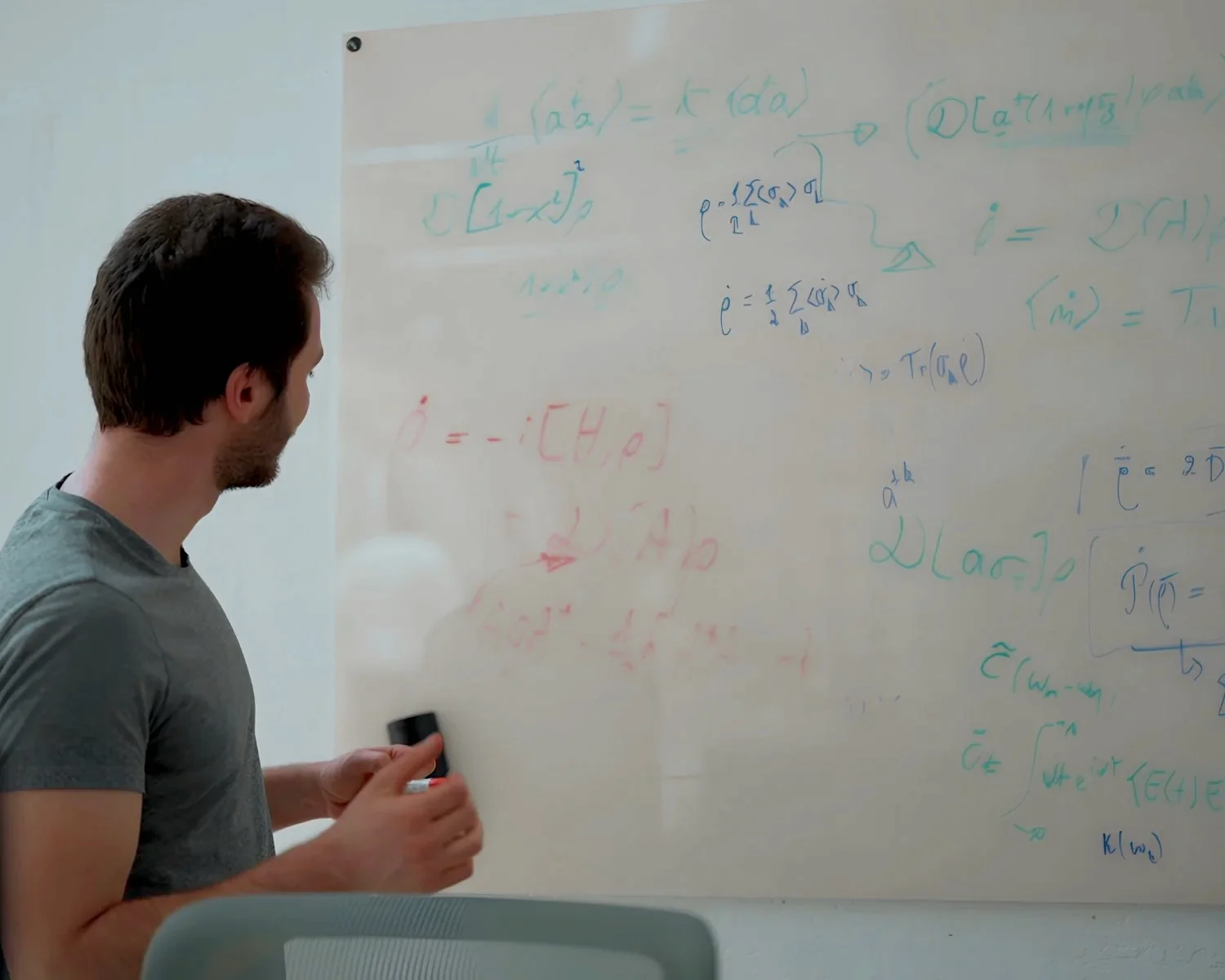
Two men collaborating at a whiteboard, one writing with a marker while the other observes.Young professionals working on laptops at a shared office desk in a modern workspace.
STEP 2
Nanofabrication
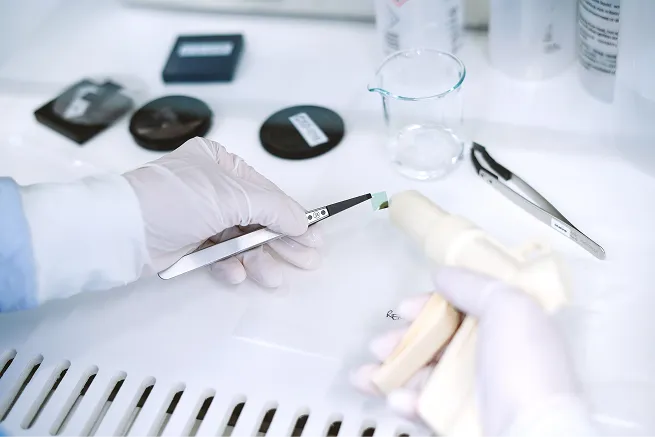
Every chip begins in our cleanroom, a high-tech in-house facility equipped with advanced tools similar to those found in leading semiconductor foundries. Here, our Nanofabrication team designs and produces the nanostructures that form the foundation of our quantum processors. Working at nanometric precision, they transform raw materials into the building blocks of a quantum computer.
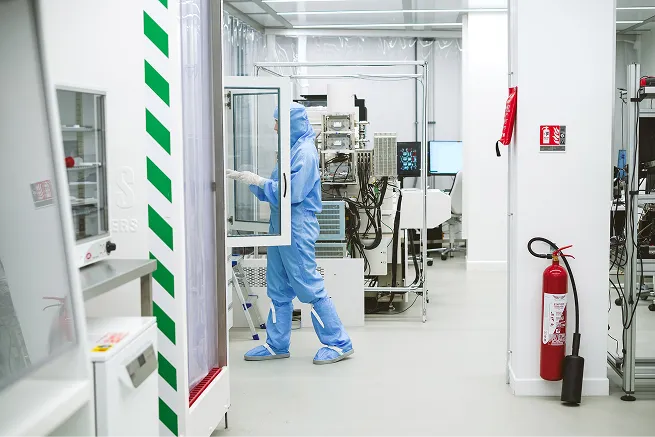
Person wearing blue cleanroom suit working in a sterile laboratory with scientific equipment and fire extinguisher on the wall.Gloved hands using tweezers to hold a small green test strip in a laboratory setting with scientific tools and containers on the table.
STEP 3
Carbon nanotube growth
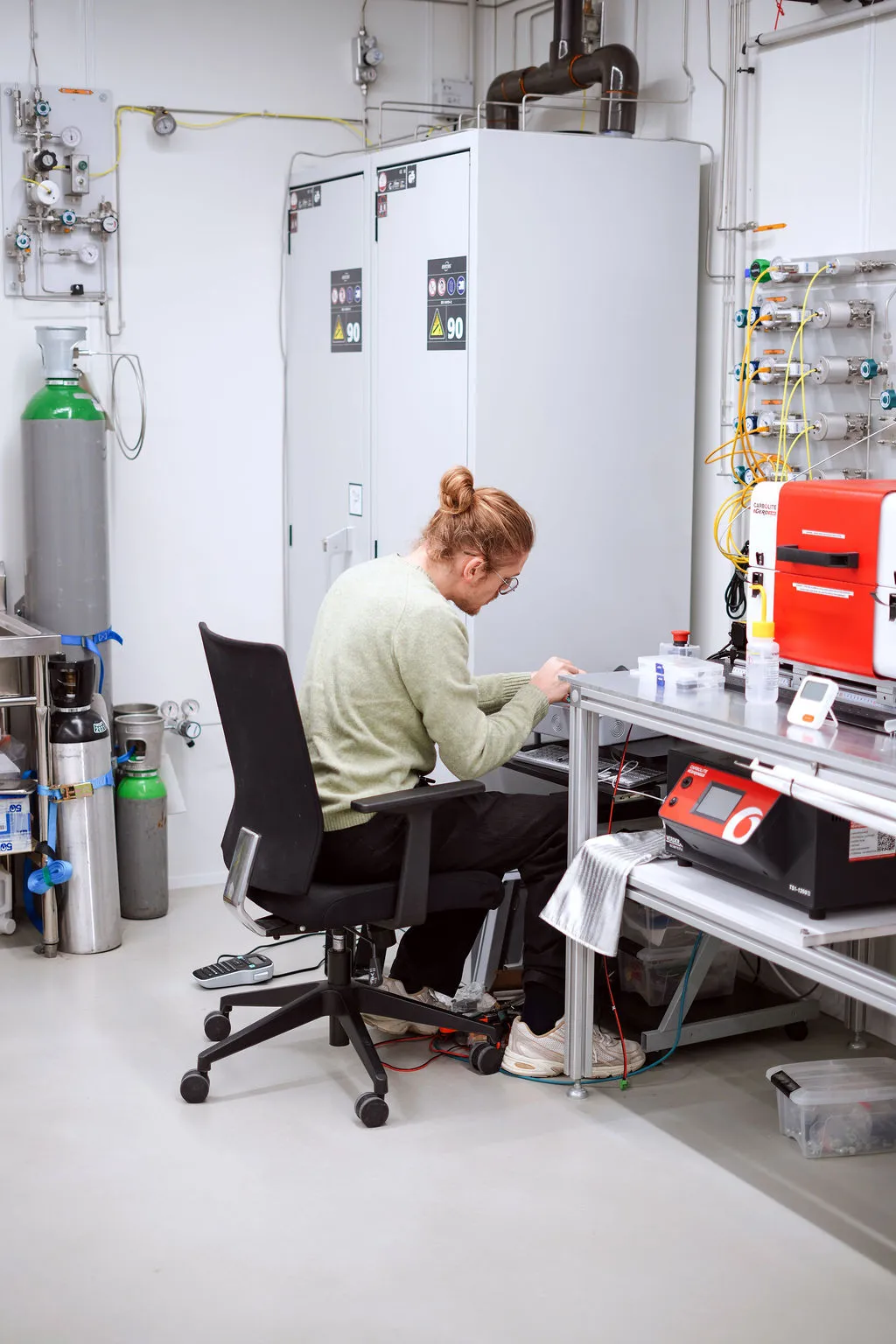
Our CNT team grows carbon nanotubes atom by atom inside a high-temperature furnace. Using the carbon-12 isotope eliminates sources of noise. In just minutes, hundreds of nanotubes are born, each up to 100 thousand times thinner than a human hair. Only the purest make it into our qubit processors.
Two scientists wearing blue lab coats working together in a laboratory.Two scientists in blue lab coats working with laboratory equipment and computer screens in a clean, white lab.
STEP 4
Characterization
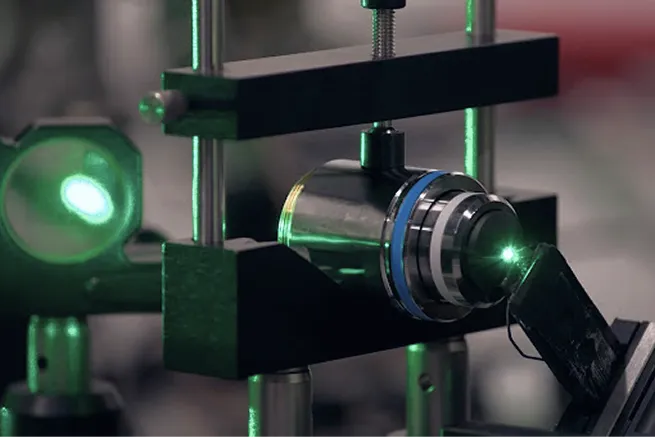
Then our Characterization team takes over. Using lasers, microscopes, and cryogenic testbeds, they test the mechanical, optical, and electrical quality of each nanotube. Only a handful meet our standards. It's a careful dance of data and intuition.
Group of five people sitting in a modern lab discussing with laptops and papers.Close-up of laboratory laser apparatus emitting a green light beam through optical components.
STEP 5
Nano-assembly
With precision that borders on poetry, our Nano-assembly team positions each approved nanotube onto the chip using a robotic arm, custom tools, and our patented nano-assembly technique. What began as a delicate, handcrafted process is now guided by increasing automation and control, ensuring both accuracy and repeatability. This is where craftsmanship evolves into scalable engineering.
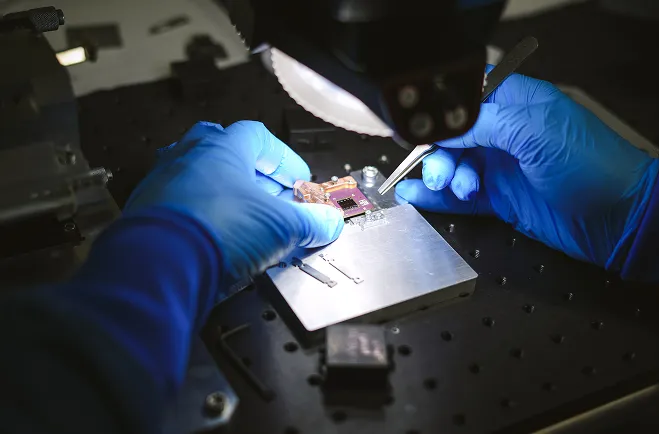
Person wearing blue gloves handling a small circuit board with tweezers under a focused light on a workbench.Gloved hand using a wrench to tighten a bolt on a stainless steel industrial valve in a laboratory setting.
STEP 6
Software enablement
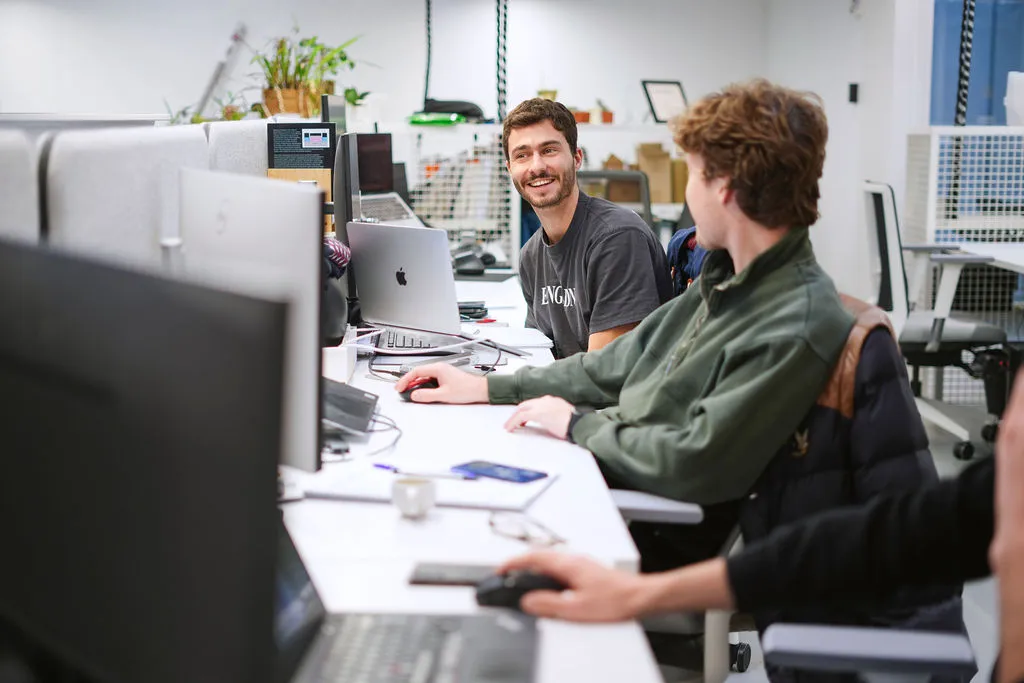
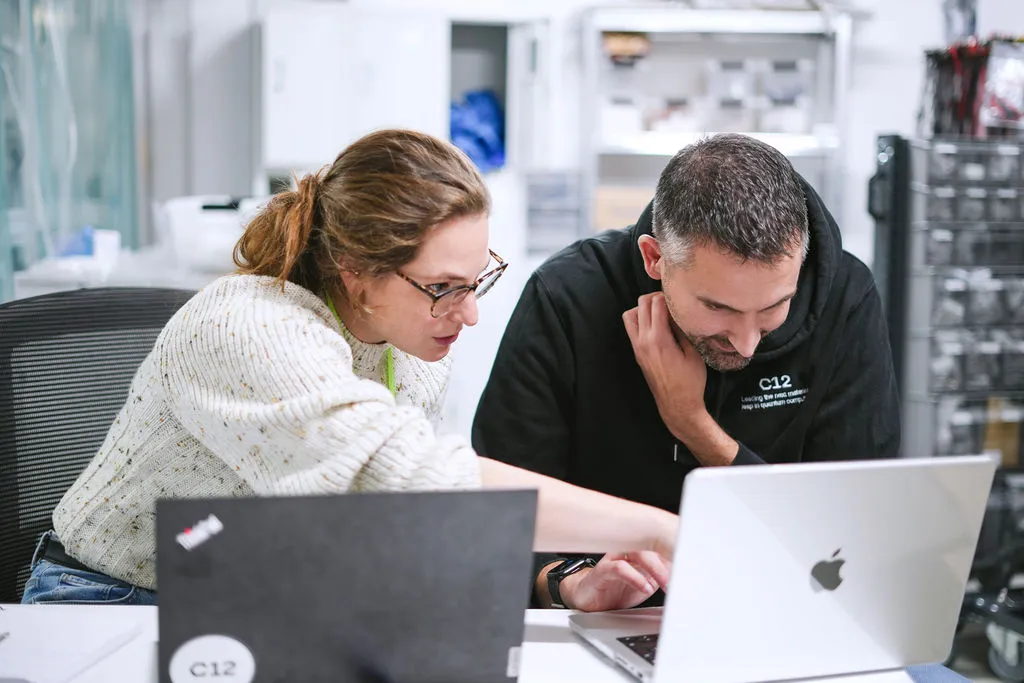
Quantum hardware doesn’t run itself. Software team builds the tools that bring it to life: orchestrating hardware, automating experiments, and enabling real-time control from lab to cryostat. They code in close collaboration with physicists, translating ideas into testable protocols.
Scientist in blue protective gear and gloves working at a computer in a laboratory with scientific equipment.Man in striped sweater working on a laptop at a shared office desk with computer monitors.
STEP 7
Qubit control
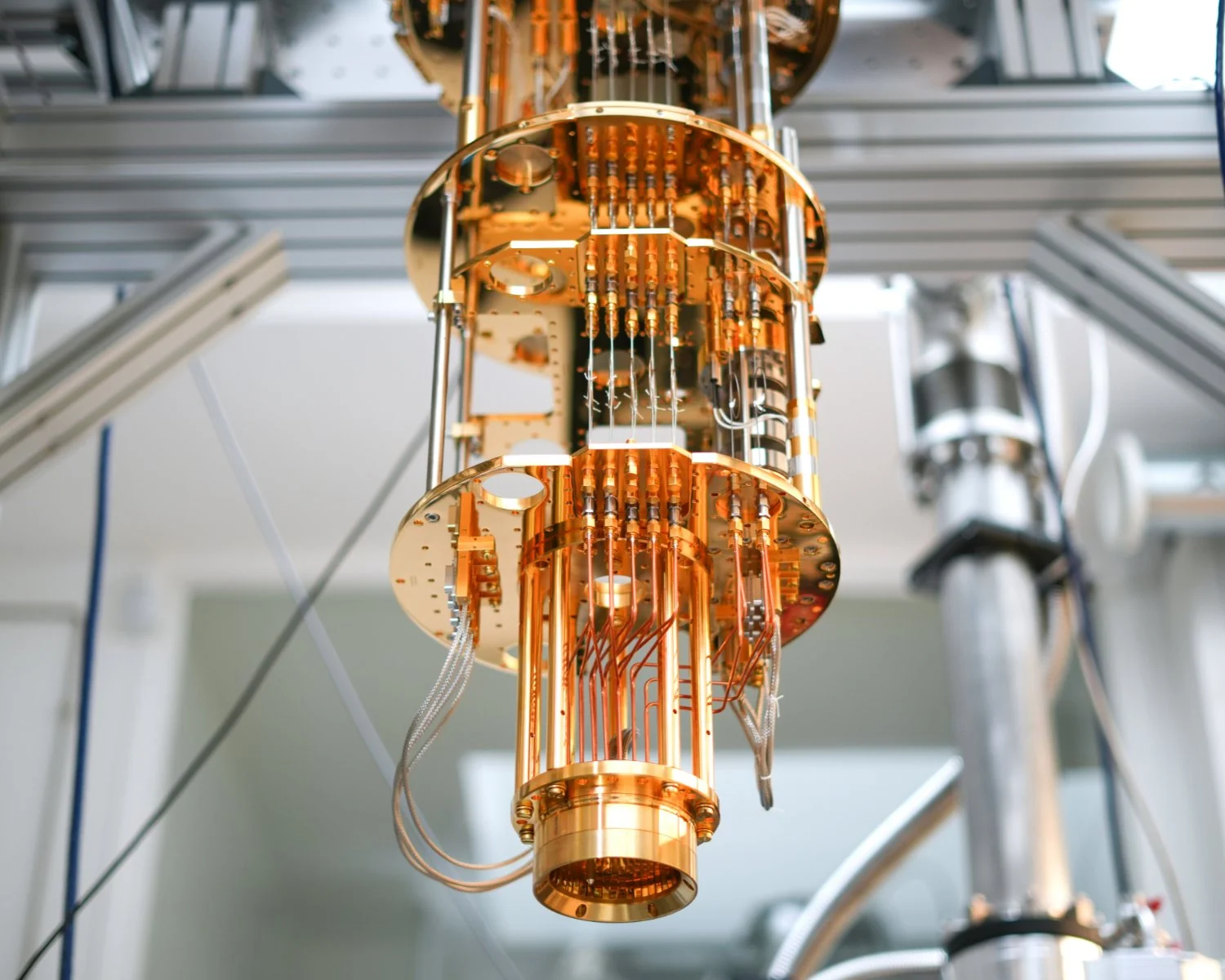
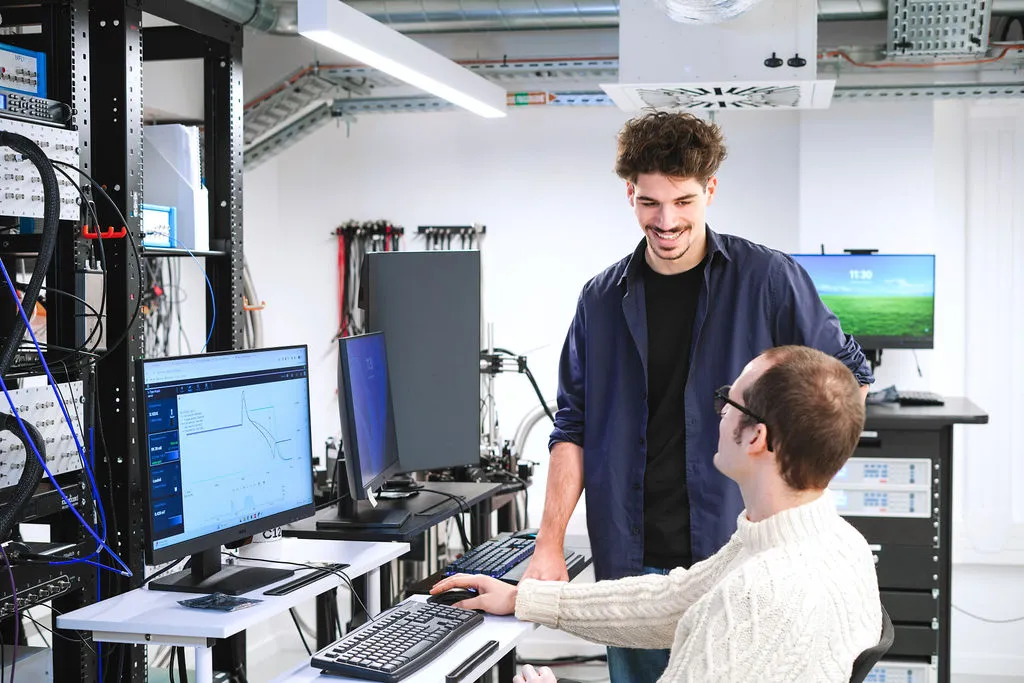
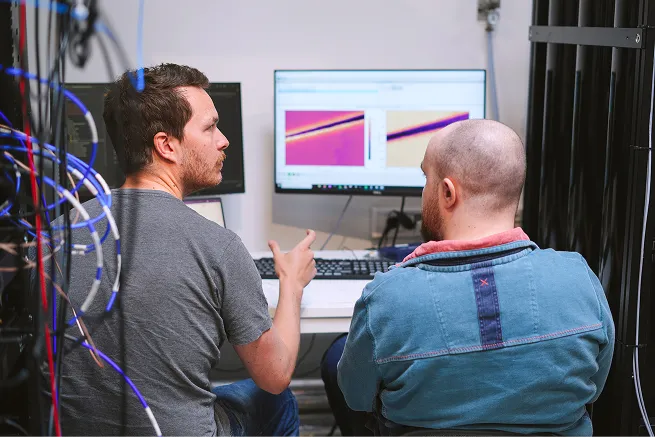
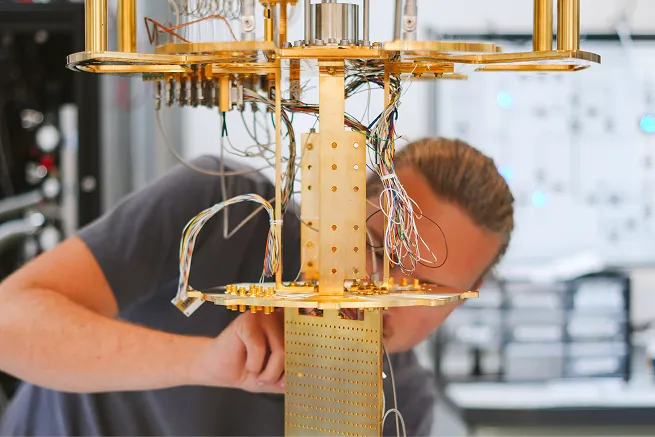
This is where quantum magic begins. Our Qubit Control team brings the chip into the cryostat, the coldest place in the universe, hovering just above absolute zero. Here, the qubits reveal their true nature. Through precision testing, they observe coherence, entanglement, and performance. It’s the moment where each chip's unique quantum behavior is unveiled—the culmination of our fabrication journey.
Technician working on a complex quantum computing device with gold-colored components and wiring in a lab setting.Two men seated and discussing data displayed on a computer monitor in a technical workspace with cables around.

Inside our
team

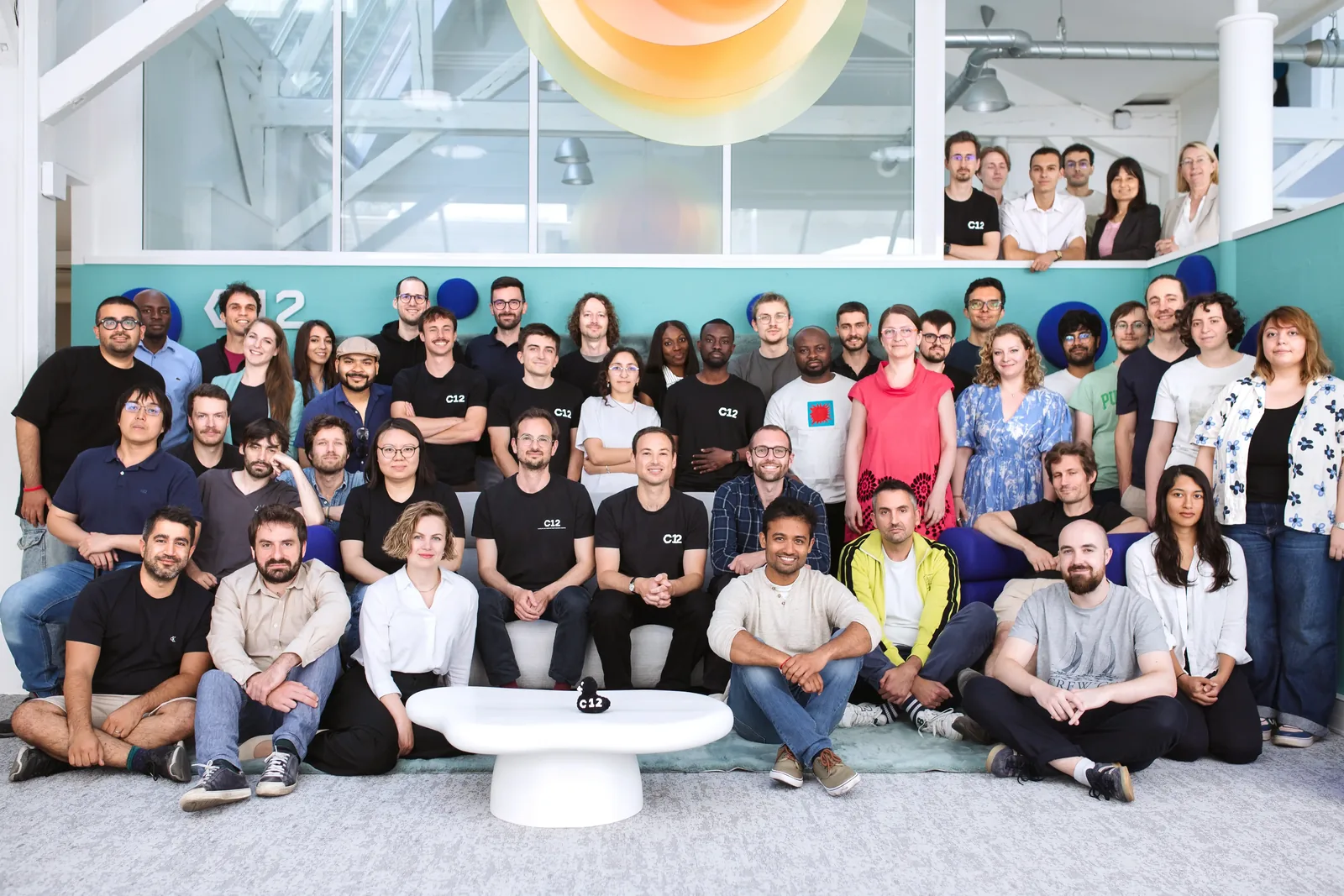
We’re more than a lab. We’re a collective of artisans, engineers, and explorers. Some joined for science. Some for the mission. All for the chance to craft something unique.
Large diverse group of people posing indoors in front of a turquoise wall under a hanging circular light fixture, some sitting and some standing.
If you’re intrigued by our
breakthroughs, inspired by our mission,
or interested in collaborating, let’s talk.